Few bags in the history of fashion have achieved quite the cultural status of the Fendi Baguette. It is a bag that defined an era, anticipated a shift in how people related to accessories, and has proven itself relevant across multiple generations. Understanding its history is understanding something important about where fashion was, and where it went.
The origins
The Fendi Baguette was designed by Silvia Venturini Fendi and launched in 1997. Silvia, the granddaughter of founders Adele and Edoardo Fendi, had been working within the family business for years and brought a particular sensibility to the project - one that combined the house's heritage in craft and materials with a sharp awareness of where fashion culture was heading.

The bag takes its name from the French bread roll, a reference to the way it is carried - tucked under the arm, close to the body, in the way a Parisian might carry a baguette home from the bakery. It is a small, structured shoulder bag with a short strap, a flap closure and a compact silhouette that was, at the time of its launch, a deliberate counterpoint to the large, logo-heavy bags that had dominated the early 1990s.
Why it became a phenomenon
The Baguette's rise to cultural prominence was rapid and, in retrospect, almost inevitable. It arrived at exactly the right moment - the late 1990s were a period of enormous energy in fashion, with a new generation of designers and consumers engaging with luxury in a more playful, less reverential way. The Baguette embodied that spirit perfectly.

What made it genuinely unusual was the breadth of its variation. Fendi produced the Baguette in hundreds of different versions - in canvas, leather, silk, denim, fur, beading, sequins and embroidery. No two seasons looked quite the same, and the sheer variety meant that the bag felt fresh and collectable rather than static. Owning a Baguette wasn't just owning a bag - it was participating in an ongoing conversation about craft, material and identity.
The bag's cultural reach was amplified enormously by its appearance in Sex and the City, where Carrie Bradshaw's collection of Baguettes became a defining element of the character's identity. The show introduced the bag to a global audience and cemented its status as the definitive accessory of the late 1990s and early 2000s.
The Mamma Baguette
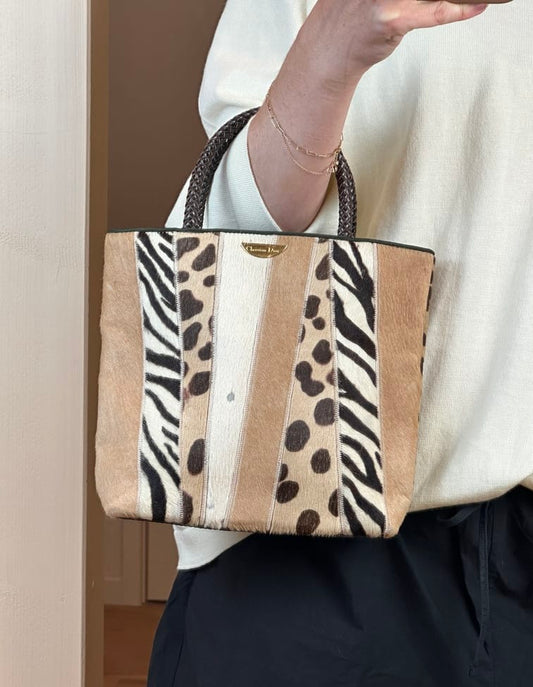
Alongside the original, Fendi introduced the Mamma Baguette - a larger version of the silhouette that offered more interior space while retaining the same essential design language. The Mamma Baguette became particularly popular in the Zucca and Zucchino canvas versions, as well as in calf hair prints - zebra, leopard and beyond - that have since become some of the most sought-after pieces in the vintage market. The Mamma Baguette occupies a slightly different space to the original - more practical for everyday use, but no less characterful.

The decline and revival
Like many bags closely associated with a specific moment in fashion, the Baguette faded from the cultural foreground as the mid-2000s arrived and tastes shifted. The logomania of the late 1990s gave way to a quieter aesthetic, and the Baguette - so thoroughly a product of its moment - receded accordingly.
But it never really disappeared. In the vintage market, Baguettes from the late 1990s and early 2000s retained a devoted following throughout the years of relative quiet, and their collectability only grew as distance from the era lent the pieces a sense of history and context that newly produced bags simply couldn't offer.
Fendi relaunched the Baguette formally in 2019, introducing new versions that referenced the original while bringing it into a contemporary context. The relaunch was a significant moment - an acknowledgement that the bag's cultural significance was too substantial to leave entirely to the archive - and introduced a new generation of buyers to a design that their older counterparts had never really stopped loving.
Why vintage Baguettes remain so desirable
The appeal of a vintage Fendi Baguette is straightforward once you hold one. The craftsmanship of the late 1990s pieces is exceptional - the materials are rich, the construction is precise, and the variety of finishes means that no two bags feel quite alike. A beaded Baguette from 1999, a Zucca canvas Mamma from 2001, a leopard print calf hair version from 2003 - each is a distinct object with its own character and history.
There is also the cultural dimension. A vintage Baguette is not just a well-made bag - it is a piece of fashion history from one of the most interesting periods the industry has produced. For collectors and enthusiasts, that context matters.
At The Hosta, we actively seek out and stock a carefully curated selection of vintage Fendi Baguettes - from the original small silhouette to the Mamma, across a range of materials and finishes. Browse our current selection and find a piece of Fendi history.